







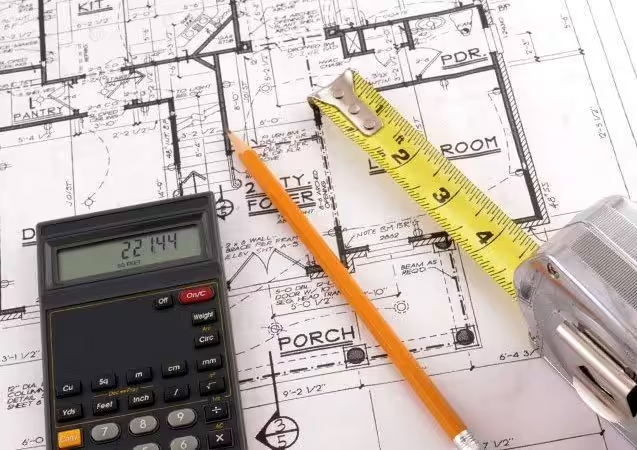
Accurate estimates are needed for construction projects, but all of the contractors’ clients have to deal with tight deadlines, dynamic prices, complicated drawings and detailed scope requirements. Spreadsheets can be cumbersome to work with when bids have thousands of quantities and cost items. Manual data entry also introduces the potential for error in calculations and for inaccuracies in the data. Hence, a lot of contractors are looking into rethinking their estimating workflow and taking digital methods that offer greater organization and consistency in competitive bidding.
Available estimating tools enable you to integrate takeoffs, material pricing, labor estimates, equipment costs and estimate revisions into a connected workflow. An estimator can have critical information in a single application rather than having to keep track of it in multiple spreadsheets. But technology can’t take the place of professional experience. Construction estimator software provides a structured approach for contractors in organizing the tasks of estimating and reviewing construction costs. Even after considering the above points, there is still considerable work to be done by the estimator before he can submit the competitive bid, such as drawing verification, specification review, condition evaluation and final figure checking.
Why Are Contractors Moving Away From Traditional Estimating Methods?
Typical methods of estimating involve using spreadsheets, calculators, printouts, and individual pricing lists. These techniques can be used for small projects, on small quantities. But they are more difficult to manage as the scope of the project increases.
It is not uncommon for there to be many different drawing sets, revisions, subcontractor quotations and price changes from suppliers in modern construction projects. It is extremely important that the estimators are able to track the updates and have accurate estimates. Without a workflow, there is a greater chance to have duplicate data and inaccurate information.
Another worry is the measurement of speed. There are strict deadlines usually associated with contract bids. Estimators can find themselves having to draw on hundreds of drawings and work out thousands of quantities in a compressed timeframe. There can be time spent manually going through these bidding cycles.
Centralized project information is a big help with many of these workflow problems and is what digital estimating platforms can help with. They provide estimators a structured environment to perform measurements, provide pricing & calculations, and make revisions.
The Limitations of Spreadsheet-Based Estimating
Construction businesses continue to use spreadsheets, as they are easy to learn and easy to use. When multiple users are working on the same estimate, however, they can become unmanageable. There’s a potential for errors to go into manual formulas that may not be seen during a hectic bidding phase. There may be confusion with different versions of spreadsheets about which is the latest version of the spreadsheet.
The challenge that arises when collaborating is another one. While one team member is still working on an older version of a material file, another team member may be editing the price file for materials. This can result in disparate numbers in the same bid.
The repeated entry of data is still needed in spreadsheets. Estimators can enter quantities in one worksheet and copy the data into another worksheet. As each new entry is added, a chance for an error arises. Spreadsheets will be good for small and simple projects. But for contractors with higher bid volumes, a more formal estimating environment is more likely to be necessary.
Why Manual Quantity Takeoffs Create Bottlenecks
Careful measurement of lengths, areas, counts and volumes should be performed to ensure that quantity takeoffs are accurate. These measurements are typically done by the estimator by hand on a printed or computer-generated drawing. This can be a lengthy process in the event that the drawings feature many rooms, assemblies, fixtures or structural components. When revisions in a project come in, rechecking measurements will take additional time.
Another problem occurs when the drawings change when taking off manually. To detect changes between revisions, the estimator might have to take measurements on multiple sheets. Digital takeoff tools can structure measurements and link quantities and cost data. This can provide a streamlined process, which will result in a faster path from project drawings to estimate.
What Is Construction Estimator Software?
Construction estimator software is a digital tool that helps to handle construction estimating activities. Some of the functions it can have are digital takeoffs, material pricing, labor calculations, equipment costs, subcontractor quotations, markups, and proposal preparation, depending on the platform.There are significant differences between these systems in terms of features and costs. Others just concentrate on takeoffs and measurements. Others include takeoffs with cost databases, bid management, reporting, and project integrations.
There are differences between the basic spreadsheet and the main one, however, in the organization of the workflow. Software can link related estimating information without having to maintain separate files. For instance, an estimator may measure a quantity on a drawing and relate that quantity to a material or labor cost. If there are cost changes, the estimator does not have to redo the entire estimate but can simply adjust the cost data for the items that changed. But software quality is dependent on the data that is fed into the system. Even if the quantities and prices are correct and the project is documented, there are many ways to get incorrect results.
Why Are Contractors Switching to Construction Estimator Software?
Contractors are making the switch because estimating departments are being pressed to submit bids more quickly that are getting more on target. Project information has also become more complex and material and labour costs may fluctuate.
With a connected estimating workflow, you can eliminate repetitive admin tasks and manage extensive amounts of cost data. It can also provide greater transparency of the process of building an estimate from the takeoff to the bid. Faster doesn’t always mean better. The contractors also take into consideration revision control, cost consistency, collaboration, reporting and integration with other construction systems.
Faster Quantity Takeoffs
Use of digital takeoff systems can minimize manual efforts in the measurement of construction drawings. Length, area, count and volume can all be directly measured from digital plans by the estimator. There are some platforms available as well that provide automatic or AI-assisted measurement options. Some of these tools can be used to recognize specific symbols, assemblies or repeated parts in drawings.
Automated measurements need to be reviewed, however. Drawings can have uncommon details, ambiguous annotations or design elements that software might not understand. Estimators who have a lot of experience will then rely on digital measurements as part of a controlled process. They check out significant numbers prior to they are added to the final estimate.
More Consistent Cost Calculations
When multiple bids are submitted by contractors, consistency of costs is a factor. Each of the estimators should base their work on good and reliable rates of materials, labour, equipment, and typical assemblies. These values can be saved in structured cost libraries in a digital estimating system. These can then be used for teams to consistently price out different projects.
There is a need to address regional pricing. Costs of materials may differ among markets and labor costs may differ by market and availability of trades in the market.It is therefore important for contractors to keep up to date cost data, and to check out key costs prior to submitting bids. Estimators need to verify the accuracy of this information, which can be organized by software.
Better Control Over Estimate Revisions
Even drawings can change prior to the bidding phase of a building project. Quantities, specifications, materials and/or installation requirements may be changed due to new revisions. Trying to keep track of these in a separate spreadsheet may cause confusion. It is possible that an estimator may mistakenly keep using quantities from a previous drawing set.
Digital systems can provide better documentation of revisions to the estimate. Teams are able to see changes and updated quantities in the same project environment. There have been other benefits from this record, such as being helpful for future reviews. Estimators will be able to determine if and why the costs vary from one version of an estimate to the next.
Fewer Manual Data Entry Errors
The more data you have to enter, the more times there are to make errors. An estimator might estimate the amount properly but may type the incorrect number on a pricing worksheet.
The reduction of the information that needs to be passed back and forth between multiple files is referred to as connected estimating workflows. Quantities may be imported to calculations, and costs are kept in the same project.
This method doesn’t get rid of errors completely. Before bidding, the quantities, units, prices and assumptions must be reviewed by the estimators.
There are ways, however, of minimizing repetitive entry, which can result in a cleaner flow. It also provides estimators with more time to concentrate on the decisions of the project.
What Features Are Contractors Looking For?
Contractors generally review estimating platforms based on the type of projects that they use and the processes they already have in place. There may be differences between a residential builder and a commercial general contractor.
The most relevant features tend to be related to takeoffs, pricing, labor calculations, bidding, collaboration, revisions and reporting. The integration of accounting or project management systems may also impact the decision-making.
Digital Takeoff Capabilities
Digital Takeoff Software lets estimators measure quantities straight out of construction plans. Lengths, areas, counts and volumes are common measurement functions. Drawing calibration is also essential since the measuring must be accurate and have to rely on the proper scale. On some platforms, one may find features to count repeated symbols or to track a specific assembly. Automated measurements should always be checked by the estimator prior to the final quantities. Where drawings have complex information, it remains important to have a professional interpretation.
Material and Labor Cost Databases
Estimating is an essential component in the construction process, and having accurate cost data is crucial. Contractors require up-to-date prices of materials, labor costs, equipment and all other relevant costs.
This information can be structured in a centralized cost database by projects. Contractors can also define their own cost items from their local suppliers and past project experience.
But cost databases have to be kept up to date. When quantities at takeoff are accurate, but old prices are used, they can result in inaccurate estimates.
Bid and Proposal Management
Estimating is not over once quantities and costs have been determined. Contractors are also responsible for collating bids, assessing the prices from subcontractors and drawing up a proposal for the client.
These activities can be integrated into the estimating workflow with bid management features. Estimators can keep a record of project opportunities, quotation information and proposal details.
A connected process also eliminates the need for the transfer of final figures from one system to another. This provides a more transparent process from initial quote to submitted quote.
Cloud Access and Team Collaboration
Information on the project can be shared from various locations using a platform based on cloud technology. This is a factor that is important for companies that have multiple offices, remote estimators or teams that work in the field.
When shared information about the project is available, it can also help to minimise confusion between team members. All users are able to use the same project data without having to use individual local files.
Access controls still are relevant. For contractors, it’s essential to evaluate the platform’s user access and permission controls, project sharing, and handling of confidential business data.
AI-Assisted Estimating Features
Artificial intelligence has been seen in the construction estimating industry in greater ways than ever before. AI can be employed to detect drawing components, count symbols or help with analysing a plan on some platforms.
These features can help to minimize repetitive measurement tasks. But the adoption of AI should not be given free rein in making the final call on estimates.
Construction drawings consist of the specific information for a project that needs to be interpreted. It is important for the estimator to check the AI quantities prior to adding them to their bid.This balanced approach is a mix of automated and human inspection. It also establishes a more realistic set of expectations for what AI can achieve in construction estimating.
How Does Construction Estimator Software Fit Into the Bidding Process?
A modern estimating process can tie together a number of the phases in the bidding process. Typically, project plans and document review form the initial steps in the process. Quantities are then taken off, and costs are added to the measured items by the estimators. They look at labor, materials, equipment, subcontractor quotes, overhead and applicable markup.
Following this, the estimating team examines the entire estimate. After approval of the figures, the contractor prepares the final proposal and submits the bid.This links up this process, making project drawings and final price clearer.
From Digital Plans to Quantities
The initial phase is based on a digital series of project documents. Estimators refer to relevant drawings and verify the current changes. They then take the necessary measurements from those sheets. The measurements can range from concrete quantities, wall areas, quantities of flooring, and the number of fixtures to electrical components, depending on the project. The estimator should check any significant quantities against the specifications and project notes. This review can be used to discover differences before the pricing process is started.
From Quantities to Project Costs
After quantities are verified, the estimators come up with a cost for every item. The estimate includes materials, labor needs, equipment and subcontractor quotes. The estimator also takes into account indirect costs, overhead, contingency and markup (if applicable). This is where construction estimator software can help create a structured project with thousands of cost items organized. But estimators need to assess the costs that fit the extraordinary and validate the key assumptions.
From Estimates to Client Proposals
Once the estimate is accepted by the end-user, the contractor works on the proposal. Pricing, scope, exclusions and allowances as well as other commercial elements should be clearly communicated in the proposal. This can be streamlined when there is a connected estimating workflow. Finals are still associated with the finished estimate and do not necessarily need to be done by hand. This connection also provides a better history of the growth of the proposal price.
Is Construction Estimator Software Suitable for Small Contractors?
Digital estimating platforms are also available for small contractors when the number of projects and/or the complexity of the work is sufficient to justify the expense. Software does not necessarily make sense by virtue of the number of employees in a company.
A smaller contractor who has multiple small bids per month may be under greater estimating pressure than a larger contractor with fewer projects because all of the small projects require estimating.
The question is about the need of workflow. Contractors should evaluate the time that they put into takeoffs, spreadsheets, revisions, pricing research and proposal preparation.
When Should a Small Contractor Consider Switching?
There are a number of signs that can be used to identify that your contractor has outgrown manual estimating.One example is to increase the volume of bids. Another warning could be that there are common spreadsheet mistakes that occur often. Extended takeoff times may also reflect on the fact that there is too much administrative work in the current process.
There can be more than one estimator in the mix, adding further complexity. In the case of multiple users keeping individual pricing files, or if estimating versions are involved, centralized software can offer a more streamlined process.The complexity of the project can also be a factor. Larger drawings, more trades and more revisions might require more robust estimating controls by contractors.
What Should Contractors Check Before Choosing Estimating Software?
When choosing software, it is important to do more than just compare the list of features. Contractors need to consider the fit of each platform to their current estimating workflow. This will vary depending on the type of project, the number of bids, technical specifications and budget.
Evaluate the Estimating Workflow
Before choosing software, contractors need to be familiar with their existing estimating workflow. They should be able to note down any areas where delays, duplicate entry and revision problems are occurring. There are also software requirements: The software must help with relevant workflow requirements, but it should not add complexity. A sample project may be a component of a practical evaluation. Estimators can practise takeoffs, revisions, pricing and proposal preparation with familiar project documents.
Review Integration Options
When a contractor already has an accounting, CRM (customer relationship management), project management or document management software in place, integration may become an important consideration. A platform with integration capabilities with tools can minimise duplicate data entry. But contractors need to ensure they know precisely what integrations are available with the software. They need to also consider the flow of data from one system to another. Limited information transfer can be a removed connection that will not give the desired workflow.
Check Pricing and Scalability
Software prices can differ based on the features, user, project, and subscription plans. Contractors should take into account the overall amount that they are likely to receive, and not just the initial quoted amount. Scala-ability is also important for the expanding businesses. The one platform that fits one estimator could become limiting if the company expands to other users. Before choosing, contractors would like to look into the user limits, storage allowances, feature restrictions and project limits.
Verify Data Security and Reliability
Sensitive pricing and supplier information, project files, and business records can be found in estimating platforms. Contractors are thus advised to check the security measures of the provider. Issues like user permissions, backups, access control and ownership of data must be taken into account. Reliability is also important for certain times of the bidding. Contractors need to be aware of the provider’s outage, technical, and data recovery policies.
What Are the Limitations of Construction Estimator Software?
Software brings helpful tools to the digital world; it has its limitations. Even if the data inputted for a project are wrong, the estimate can still be wrong. For instance, an estimator can upload old drawings and end up with correct estimates if the information provided is incorrect. Likewise, an aging cost database can lead to inaccurate costing.
There can also be learning curves with regard to adoption. Spreadsheet users may take time to get up to speed with a new platform. Another factor to consider is the cost of the subscription. It is important for contractors to look at the price of software and their needs for estimating and how much work they are likely to put into it.
These are features that are heavily dependent on AI and need special attention. Unusual aspects of the drawing may not be picked up by an automated measurement or may be misinterpreted. So, expert review is still needed. Software is not a replacement for construction knowledge and decision-making but a tool to aid in estimating.
Conclusion
Modern estimating tools integrate takeoffs, material pricing, man-hour estimation, equipment costs and estimate revisions into an integrated workflow. Estimators can control important information in one location, rather than having to use multiple spreadsheets. While technology can be a great help, though, it cannot take the place of a professional’s experience. Construction estimator software provides a structured approach to organizing construction estimating tasks and reviewing the construction project costs. Even with the drawings finished, the specifications reviewed, conditions taken into consideration and figures confirmed, estimators must still complete drawings, review specifications, assess conditions, and check final figures before submitting competitive bids.
FAQs
What’s driving the shift to construction estimator software for contractors?
Manual estimating processes are inefficient, especially as projects become increasingly complex, and many contractors are transitioning to digital to manage them more easily. Takeoffs, prices, revisions and biddings can be organized in a connected workflow using digital platforms.
Is construction estimator software worth it for small contractors?
It can be a good fit for a small contractor who is bidding on a lot of jobs, time-consuming manual takeoffs, or complicated projects. This should be based on the number of projects, workflow needs and software expenses.
Is construction estimator software a substitute for an estimator?
NO. Software can calculate, arrange information and automate repetitive tasks. Even veteran estimators must analyze drawings, count quantities, take into account project risk, and review costs.
What features are attractive to the contractor in estimating software?
Some of the key functions might be digital takeoffs, cost databases, labor calculations, bid management, revision tracking, collaboration, reporting, integrations, and security. If there is an overlap in features with the contractor’s work, features should be a priority.