





UK businesses are expected to respond quickly, support flexible working, and keep communication costs under control. A cloud business phone system gives organisations a more modern way to manage calls, support staff across locations, and reduce dependence on traditional hardware. For companies that want practical communication tools without unnecessary complexity, the cloud model has become a strong alternative to legacy telephony.
How the cloud model works
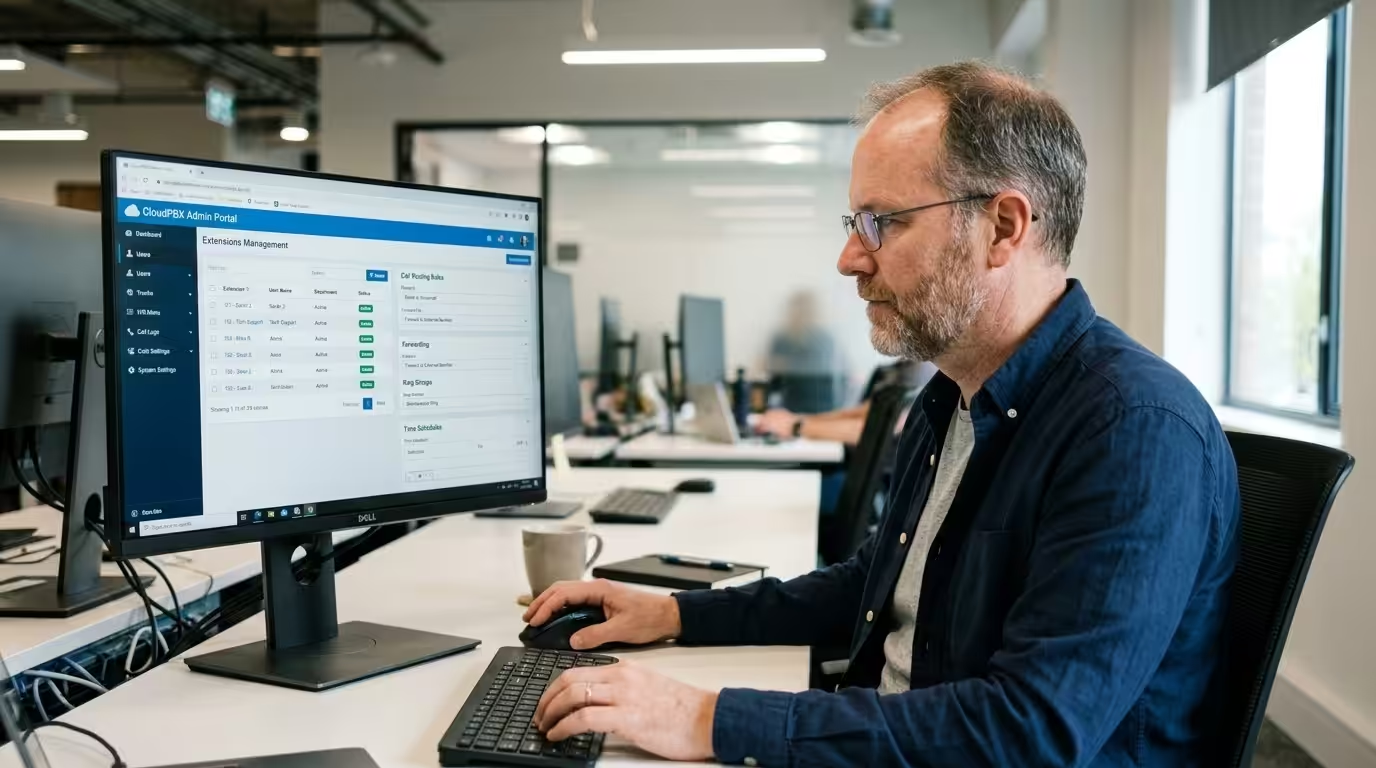
A cloud business phone system moves the core telephone functions away from on-site equipment and into a provider-managed environment. Staff can make and receive calls using desk phones, laptops, mobile apps, or softphones, while administrators manage call routing, voicemail, and user settings through a web portal. This reduces the need for physical PBX hardware and makes system changes much easier to handle.
Because the system is hosted remotely, businesses can add users or locations without waiting for on-site installation. That flexibility is especially useful for firms that are growing, hiring remotely, or operating across multiple branches. It also means updates, backups, and maintenance are handled more efficiently by the service provider.
Why UK businesses are adopting it
One of the biggest reasons organisations choose a Cloud business phone system is cost control. Instead of making a large upfront investment in equipment, businesses usually pay a predictable monthly fee. This creates clearer budgeting and lowers the financial risk of upgrading communications.
Another advantage is speed. New users can often be added quickly, and remote staff can be connected without complicated setup. For a business cloud phone system, this kind of agility is often more important than having highly customised infrastructure.
It also supports hybrid work well. Employees can use the same business number whether they are in the office, at home, or on the move. That consistency matters for customer service, sales teams, and any organisation that wants to present a professional and unified image.
Features that matter most
When comparing options, businesses should look closely at the features included. A cloud business phone system should make everyday communication simpler, not harder. Useful features often include call queuing, voicemail-to-email, auto-attendants, mobile access, and reporting tools.
What to check before choosing
- Call quality and network reliability.
- Ease of adding or removing users.
- Support for desk phones, mobiles, and desktop apps.
- Integration with CRM or helpdesk software.
- Security controls and data protection standards.
A cloud based business phone system should also be easy for staff to understand. If the system is too complicated, the benefits of moving away from legacy telephony can quickly disappear.
A practical fit for small businesses
For smaller organisations, simplicity and value are usually the main priorities. A cloud phone system for small business should be affordable, straightforward to manage, and flexible enough to grow with the company. Many small firms want a system that works well from day one without requiring specialist telecom knowledge.
A small business cloud phone system can provide the core features most teams need without unnecessary extras. That includes call forwarding, voicemail, mobile access, and clear administration tools. For a cloud based phone system for small business uk, the ability to support local support expectations and UK business practices is also important.
Smaller companies often gain the most from reduced maintenance and easier scaling. Instead of worrying about hardware failures or expensive upgrades, they can focus on using the system to support customers and internal collaboration.
Choosing the right provider
Selecting the right provider is just as important as choosing the technology. A cloud business phone system should come with strong support, transparent pricing, and reliable service levels. Businesses should ask how issues are handled, what onboarding support is included, and how data is protected.
Wavetel business is one provider offering communication services for UK organisations. Mentioning them here is simply a practical reference point for businesses comparing suppliers. The key is to work with a provider that understands the needs of UK firms and can support both current operations and future growth.
When reviewing a cloud based business phone system, businesses should also think about how it will fit with other tools they already use. Integration with customer records, shared inboxes, and collaboration platforms can make the system more useful and reduce duplicated work.
Why the cloud approach continues to grow
The move toward cloud communications reflects a wider shift in how businesses operate. Teams are no longer always in one location, and customers expect fast, reliable contact. A cloud business phone system helps meet those expectations without forcing companies into a rigid infrastructure model.
It is also easier to adapt over time. If the company expands, restructures, or changes working patterns, the system can often be updated without major disruption. That flexibility is one of the main reasons a cloud business phone system remains relevant for UK businesses looking ahead.
Final thoughts
A cloud business phone system is a practical choice for UK organisations that want to improve flexibility, support hybrid work, and keep communication management simple. Whether a business is small or growing quickly, the cloud model offers a more adaptable way to handle telephony than older on-site systems. For companies that value predictability, mobility, and scalability, it is well worth considering.
Call to Action
If your organisation is exploring modern telephony, consider a cloud business phone system from Wavetel business to see how a cloud-based solution could support your communication needs.