


A car can start looking different surprisingly quickly after leaving the showroom. The paint picks up tiny marks from everyday driving, dust settles into the surface, and the occasional stone chip appears on the bonnet after a highway trip. For some owners, changing the car’s appearance is enough reason to consider a wrap. Others would rather keep the original paint intact and protect it for as long as possible.
That is where the discussion around car wrapping cost and paint protection film becomes relevant. Both are popular ways of changing or protecting a vehicle’s exterior, but they serve quite different purposes. Knowing what you are actually paying for makes it easier to decide which option makes sense for your car.
What Does Car Wrapping Actually Do?
A car wrap is a thin vinyl material applied over the vehicle’s existing paint. Its biggest attraction is flexibility. You can change a car from white to black, add a satin finish, choose a bold color, or even create a completely custom look without permanently repainting the body.
The price varies considerably. A small hatchback will generally cost less to wrap than a large SUV, while premium vinyl, unusual finishes, and more complicated bodywork can push the bill higher.
What Is Paint Protection Film?
Paint protection film, commonly called PPF, is designed with a different goal in mind: preserving the original paint.
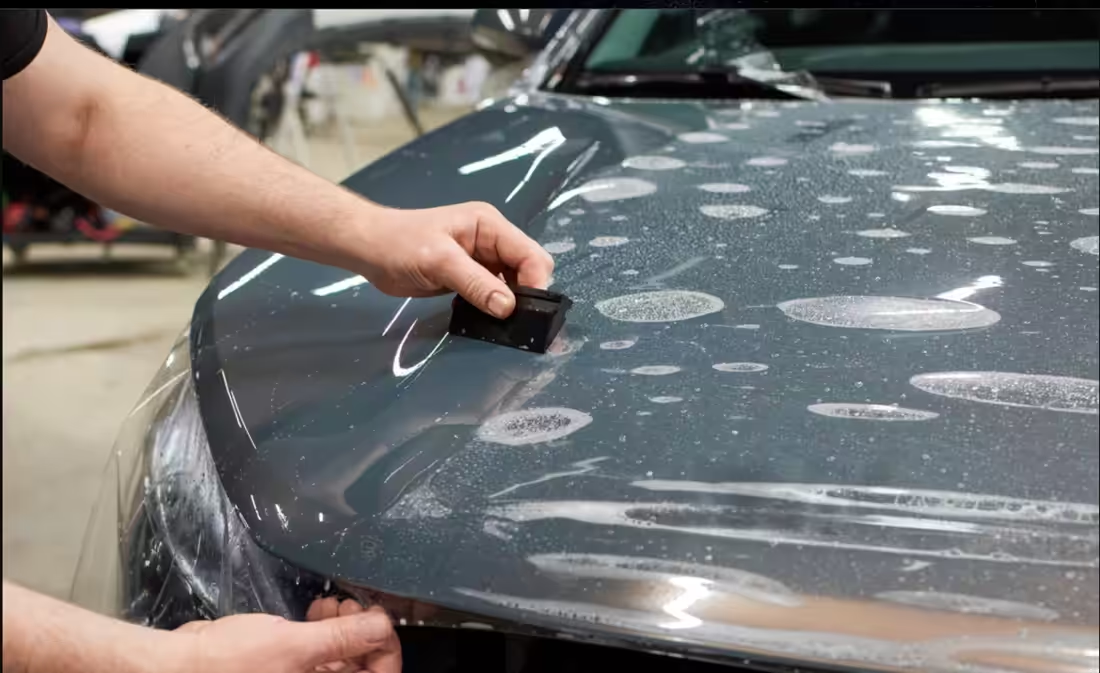
PPF is usually made from polyurethane and is thicker and more impact-resistant than ordinary vinyl wrap. It is applied to painted panels and acts as a sacrificial layer between the road and the factory finish.
That matters most on areas such as the front bumper, bonnet, fenders, and mirrors. These sections regularly face loose gravel, insects, road debris, and other small impacts.
Some modern PPF products also feature self-healing surfaces. Light scratches and swirl marks can disappear when the film is exposed to heat, helping it maintain a clean appearance for longer.
Which Option Offers Better Paint Protection?
If protecting the original paint is the main objective, PPF has the advantage.
Vinyl wrap can protect against light scuffs, minor scratches, and some environmental exposure, but it isn’t intended to absorb repeated stone impacts. PPF is specifically designed to handle this kind of abuse.
That distinction becomes noticeable for people who drive frequently on highways. A wrap may look excellent when installed, but repeated stone strikes can eventually leave marks through the vinyl.
PPF, on the other hand, provides a much stronger barrier between those impacts and the paint.
When Does a Wrap Make More Sense?
A wrap can be the better choice when appearance is the priority.
Perhaps you have grown tired of the factory color, want a matte finish for a few years, or simply enjoy changing the car’s personality. Vinyl makes these changes possible without committing to a permanent repaint.
It can also make sense for owners who change vehicles relatively frequently and don’t want to make a large investment in long-term paint protection.
In that situation, paying a lower car wrapping cost for a temporary visual change may be perfectly reasonable.
When Is PPF Worth the Investment?
PPF makes more sense for someone who loves the factory paint and wants to keep it that way.
It is particularly useful for new cars, premium vehicles, and cars that are likely to be kept for several years. The film can reduce the number of chips and scratches reaching the original paint, which can make a difference when the vehicle is eventually sold.
Some owners also combine the two approaches. A color-change wrap can be used for appearance, while PPF is installed on particularly vulnerable sections. The exact combination depends on the materials used and the owner’s priorities.
Don’t Overlook Installation Quality
Whichever route you choose, the workshop matters.
A vehicle needs to be thoroughly cleaned before either material is applied. Existing contamination, scratches, or poorly corrected surfaces can become much more noticeable once a film is installed over them.
For PPF in particular, accurate panel alignment and clean edges are especially important. A premium product installed poorly will not deliver the result expected from it.
It is worth looking at previous installations, asking about warranty coverage and understanding what aftercare is included before making a decision.
Conclusion
The simplest way to look at it is this: a wrap is primarily about changing the car’s appearance, while paint protection film is primarily about protecting the paint.
If color, finish, and visual customization are your priorities, a wrap can be an attractive option. If keeping the original paint free from chips and everyday damage matters more, PPF is usually the more suitable investment.
And when comparing the car wrapping cost with the price of PPF, don’t judge either option only by the initial quotation. Think about how long you intend to keep the car, where you drive it, and what you want the exterior to look like a few years from now.