







Today, more and more emphasis on the Automotive OEM industry has been given to provide an experience rather than simple transport. Consumers desire not only strong performance, sophisticated tech, high levels of comfort, appealing aesthetics, but also a level of luxury, which includes additional features of cars. Sunroofs are one such feature that is being observed to become a vital part of current cars, particularly high and premium range passenger vehicles.
Sunroof can transform your car’s interiors by bringing in more light and giving the sense of wider space. As OEMs extend this facility on their cars, the scope of the automotive sunroof systems is also being expanded, as sunroofs are making their way across vehicle types in the form of panoramic roofs and even larger panes with greater automation.
Expert Market Research on global automotive sunroof market says global market size of automotive sunroof market stood at USD 12.91 Billion in 2025 and is projected to grow with a CAGR of 6.90% during 2026-2035 to reach USD 25.16 Billion by 2035. Increase in demand for premium cars is also expected to foster growth of this market.
Premium Vehicles Are Changing Consumer Expectations
The demand for luxury vehicles is tied into changing consumer expectations. As such, consumers are gravitating towards the models with unique cockpits and special elements that promote the best possible vehicle experience.
From ambient cabin lights to an infotainment display system, leather interior, panoramic roof and premier sound systems to mention a few; it is commonplace to find such elements employed by manufacturers to set vehicles apart, and with every passing year such innovations come standard to models across different ranges.
Sunroofs Are Becoming a Design Feature
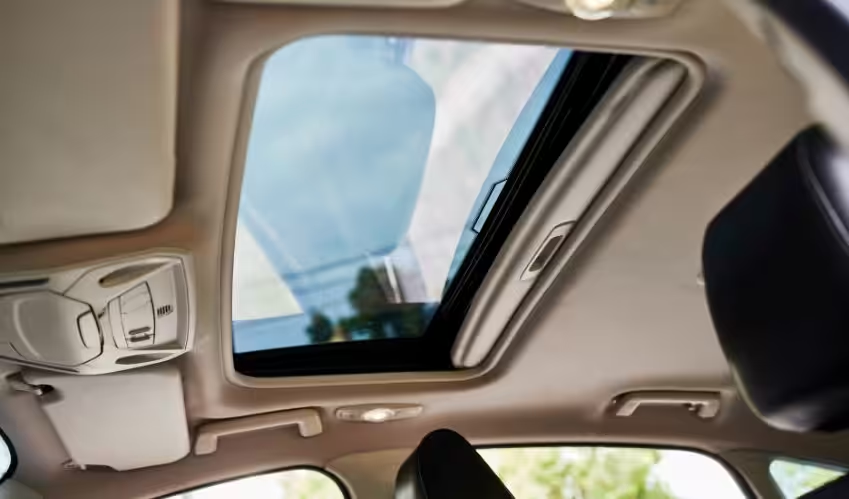
A sunroof is now looked upon as more than a mere opening in the roof, and modern systems have an impact on the vehicle’s exterior styling and interior layout. The large panes of glass can provide an impression of a wider cabin and a sense of luxury from the outside.
The panoramic sunroof further consolidated this trend; rather than a small opening in the roof above the front row passengers, the panoramic system will cover a significant chunk of the roof, and produce a feel of space for the rear passengers too.
Growing Popularity of Panoramic Sunroofs
The panoramic sunroof is increasing its presence across many high-end sedans, CUVs, sport utility vehicles and other passenger cars because of its expanded glass area and thus expanded forward and upward line of sight and natural light entry into the cabin. Automakers see this feature as added luxury without drastic chassis design changes.
Drivers will find that this increases spaciousness within the cabin and its cosmetic appeal. This increasing popularity is encouraging consumption of enhanced sunroof systems with more features such as expanded sizes, more developed controls, and improved safety.
Premiumisation Is Expanding Beyond Luxury Brands
What this is the process is creating opportunity beyond luxury: It’s not exclusive to the traditional luxury luxury nameplates, even some of the conventional brands are trying to build in that more deluxe content into their mid range offerings to kind of lure in buyers that previously they couldn’t have come to that brand without more of their content.
This expands the addressable market for the sunroof and of what becomes the addressable opportunity. The more and more volume products, the vehicles, the models that offer that optional content, it comes beyond the historic and conventional.
And I would say the consumer, as things get priced away from pure, I guess the price ceiling I would say the ability to purchase those features that once were only in pure cost-of the-higher margin vehicle at a price which may be lower will continue over time create the ongoing demand for sunroof products in automotive market.
Technology Is Improving Sunroof Performance
As materials, sensors, electronics and control modules become more advanced, the modern sunroof is evolving from a manual device to one fully integrated with and operated electronically. Electric drive enables the driver to efficiently and quickly adjust not only the direction of a sunroof system’s opening sunroof panels, but also its open/close state and degree of tilt with ease and little physical input. Future sunroof systems can even employ anti-punch technology, automatically closing functions and electronic control.
These systems offer greater convenience while automakers also respond to public demands that their vehicles be smarter as well as safer. With further technology developments this system’s becoming less of a mechanical opening within a car, and more a full electronic module.
Glass Technology Is Supporting Innovation
Innovation in automotive glass affects more than car windows, the sunroof is no exception. The desire to utilise light but robust thermal glass products that offer improved visibility while aiding to regulate interior cabin temperatures is also key in sunroof design.
These tinted and technical automotive glass solutions minimise direct sunlight effects, enhances passengers experience, especially with a large expanse of glass like those used in panoramic roofs, while balancing design, interior conditions and efficiency.
Comfort and Interior Experience Matter More
Today’s buyers are more likely to judge cars based on the interior experience-how light and pleasant it is inside, how comfortable the seats are, what the lighting and audio/video systems are like, and how connected and cool the cabin is.
Sunroofs play a role in creating the desired interior experience by both allowing light to flood in when it is closed, and, when the weather allows, by giving drivers an option of enjoying the air and a more direct connection to the world outside. For this reason, the emotional and sensual aspects of a sunroof add to its desirability:
SUVs Are Creating New Opportunities
The growing adoption of sport-utility vehicles and crossover vehicles is also a major opportunity for the automotive sunroof industry. SUVs and crossovers typically have bigger roof structures and can house panoramic sunroof systems more easily.
In fact, large glass roofs have become more prevalent as integrated elements for the luxury segment – especially within high-profile SUV ranges, they can be key design tools, helping to drive a stronger positioning among luxury vehicle alternatives and key market competitors.SUV vehicle segment provides significant market potential for the sunroof industry as these type of models constitute significant share in the passenger cars market around world.
Electrification Is Creating New Design Possibilities
Electrification is also impacting vehicle architecture and interior styling. The electric platform offers the manufacturer additional flexibility over how certain components are situated; this means designers are free to reconsider how cabins and roof structures are styled.
Electric vehicle manufacturers are focusing heavily on interior space, simplicity and high levels of technology. Large glass roofs will help complement this design strategy through a ‘more spacious and contemporary’ feeling cabin.
Yet sunroof manufacturers are facing the challenges of weight, thermal performance, structural loads and power consumption that are all part of the evolution of vehicle platforms.
Lightweight Design Is Becoming Important
Every area of the industry is focused on vehicle weight management, including developing cars that get more miles to the gallon, as well as giving greater driving range to cars and trucks that use rechargeable batteries. Since sunroof systems do add weight to the overall vehicle, a vehicle requires careful engineering to develop lightweight designs.
Manufacturers are therefore also on the look for better and lighter methods to assemble roof openings, including those that do not lead to an undue increase in vehicle weight, and thereby do not necessarily impact vehicular performance or range.
There continues to be ongoing invention and development in both frame, glass, mechanism systems and the myriad other parts associated with sunroofs and other roof openings.
Safety Remains a Key Priority
Sunroofs and safety The growing scale and features of sunroof systems place a premium on safety ensuring that roofs fulfill structural and safety requirements while offering efficient operation is paramount for OEM. Future-oriented sunroof sunroof systems:
Features like automatic reverse closing to prevent injuries or the structural integration into the total design of the vehicle. OEMs were once forced to consider tradeoffs between looks, safety, reliability, structural properties; that now drives an emphasis on high engineering skills that combine aesthetics with superior functionality.
Personalisation Is Influencing Vehicle Purchases
People are opting to go more personal with their car choices and, of course, automotive companies are being able to respond with more choice in colours, inside materials, tech options, lights, wheels and anything else.
This ability for customisation includes choice over sunroof options, so the driver might have a normal sunroof, panoramic opening or just a regular roof option the particular specification. The choice enables auto manufacturers to be able to appeal to a range of people and makes for more opportunities for an extra charge up charge up
The Future of Automotive Sunroofs
“We see the trend in terms of the industry moving towards the automotive sunroof market towards bigger, smart, lightweight and integrated solutions. Therefore I assume there is still some interesting development work in terms of Panoramic glass roofs, electric controls, further safety features, new materials, better thermal management, etc. On the other hand, with vehicle premiumization, also sunroof use for comfort, design, technology and also customer perceived value increases the overall benefit of a vehicle,” says a representative for HACO-Automotive Sunroofs GmbH.
However, with automotive sunroof sales for premium vehicles growing, experts expect healthy growth and market value increasing between 2026 to 2035 with 6.90% CAGR to 25.16 billion USD from 12.91 billion USD in 2025 with the increasing in vehicle premiumisation and changing customer preferences, the market value of the automotive sunroofs in the automotive segment is projected to exceed billion dollars.
“The trend reflects a major change in our automotive industry, whereby vehicles are more and more perceived not only as transporters but also as a comfort providing product that offers an added luxury and lifestyle experience,” he adds. From a traditional electric sunroof to large panoramic glass sunroofs, sunroofs are considered to play an imperative role in future vehicle development.