





A veterinary third party manufacturing company in India produces animal medicines for other brands. When comparing veterinary 3rd party manufacturers, evaluate licences and GMP compliance, testing practices, formulation range, packaging quality, pricing transparency and communication. A scorecard approach helps you compare options objectively rather than by price alone.
Understanding the Landscape
India has many companies offering contract manufacturing for animal health products. They differ in size, product range, quality systems and service levels. Some specialise in one dosage form, such as injectables, while others cover injections, boluses, feed supplements and pet-care products.
With this variety, shortlisting is less about finding “the best” company in general and more about finding the best match for your brand, budget and goals.
What a Veterinary Third Party Manufacturing Company Provides
Typical services include:
- Contract production of medicines under your brand
- Formulation support for standard or customised compositions
- Raw material sourcing from qualified suppliers
- Quality control testing during and after production
- Packaging and labelling to your design and regulatory requirements
- Documentation such as batch records and product specifications
- Logistics support for delivery to your warehouse or distributors
Why Brands Prefer Veterinary 3rd Party Manufacturers
Asset-light model
You avoid factory setup, machinery, cleanroom construction and a large technical workforce.
Scalability
You can begin with a few products and add more as demand grows.
Speed
Existing infrastructure shortens the path from idea to shelf.
Brand control
Your name, your pricing and your customer relationships remain yours.
Building Your Comparison Scorecard
Create a simple table and score each candidate from 1 to 5 in the following areas.
| Criterion | What to look for |
| Licences | Valid manufacturing licence, matching address |
| GMP compliance | cGMP or WHO-GMP practices, certificate copies |
| Quality control | Raw material and finished product testing |
| Product range | Injections, boluses, supplements, pet products |
| Customisation | Ability to adjust formulations and packs |
| Packaging | Quality, protection, design flexibility |
| Minimum order quantity | Fits your budget and launch plan |
| Pricing clarity | Itemised, written quotations |
| Communication | Responsiveness, technical clarity |
| Track record | Years in operation, reviews, references |
Add weights if certain factors matter more to you. For example, quality and compliance may deserve double weight compared with packaging.
Red Flags When Comparing Manufacturers
- Reluctance to share licences or certificates
- Vague answers about who actually produces the medicine
- Unusually low prices with no explanation
- Pressure to place large orders immediately
- No sample labels or product specifications
- Poor communication before the deal is signed
Any of these should prompt further checking or a decision to look elsewhere.
Questions to Ask During Discussions
- Do you manufacture at your own facility?
- Which licences and GMP certifications do you hold?
- How do you test raw materials and finished batches?
- What is your minimum order quantity for each product?
- What are your typical production and dispatch timelines?
- Can you customise packaging and labels?
- How do you handle quality complaints or returns?
- Do you keep batch records and retained samples?
Write down the answers and compare them across companies.
Match the Manufacturer to Your Business Type
New brand owners benefit from manufacturers that explain the process clearly and support small first orders.
Distributors going private label should prioritise consistent supply and reasonable minimum quantities.
Veterinary clinics may value smaller pack sizes and clear technical information.
Established pharma firms often need strong documentation and capacity for larger volumes.
The Importance of Compliance
Veterinary medicines in India are regulated under the Drugs and Cosmetics Act, 1940 and associated rules, which set expectations for licences, manufacturing practices and labelling. Working with a compliant manufacturer protects your business from regulatory trouble and protects animals from poorly made products.
Remember, though, that you may also have responsibilities as a brand owner, such as complying with labelling and marketing rules and holding any licence needed for selling. Check with the relevant authority.
Where Petvet Healthcare Fits
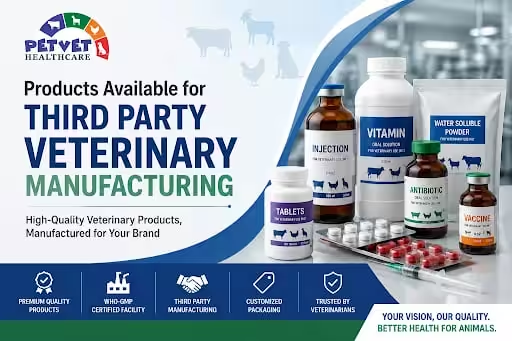
Petvet Healthcare is a veterinary manufacturer in Ambala Cantt, Haryana, established in 2019. The company says it follows WHO-GMP and cGMP norms and manufactures injections, boluses and feed supplements for livestock, poultry and pets.
Its third party veterinary manufacturing service supports brands that want to sell under their own name. You can evaluate its range through the product list, examine packaging in the product gallery and learn more on the About Us page.
Businesses that want to start with an established brand instead can consider the veterinary PCD franchise.
A Practical Shortlisting Timeline
- Week 1: Define your product list, species focus and budget.
- Week 2: Contact three to five manufacturers and request documents and catalogues.
- Week 3: Compare quotations and score each company.
- Week 4: Request samples or arrange a facility visit, then place a trial order with your top choice.
The exact timeline will vary, but a structured approach avoids rushed decisions.
After You Choose
Once you select a partner, sign clear terms covering product specifications, pricing, delivery schedule, quality responsibilities and handling of any disputes. Keep records of approved label artwork and batch details. Review performance after the first order and adjust your plan.
Frequently Asked Questions
What is a veterinary third party manufacturing company?
It is a company that manufactures veterinary medicines for other brands under contract.
How do I compare veterinary 3rd party manufacturers?
Use a scorecard covering licences, GMP practices, testing, product range, customisation, pricing and communication.
Is the cheapest manufacturer the best choice?
Not necessarily. Low prices may reflect compromises in materials, testing or packaging. Evaluate total value.
Can I visit the manufacturing facility?
Many manufacturers welcome visits or provide details on request. Ask early in the discussions.
Conclusion
Selecting a veterinary third party manufacturing company in India is easier when you define your needs, build a scorecard and check credentials carefully. The right partner becomes an extension of your business, supporting quality and growth. To start a conversation, use the Petvet Healthcare contact page.