
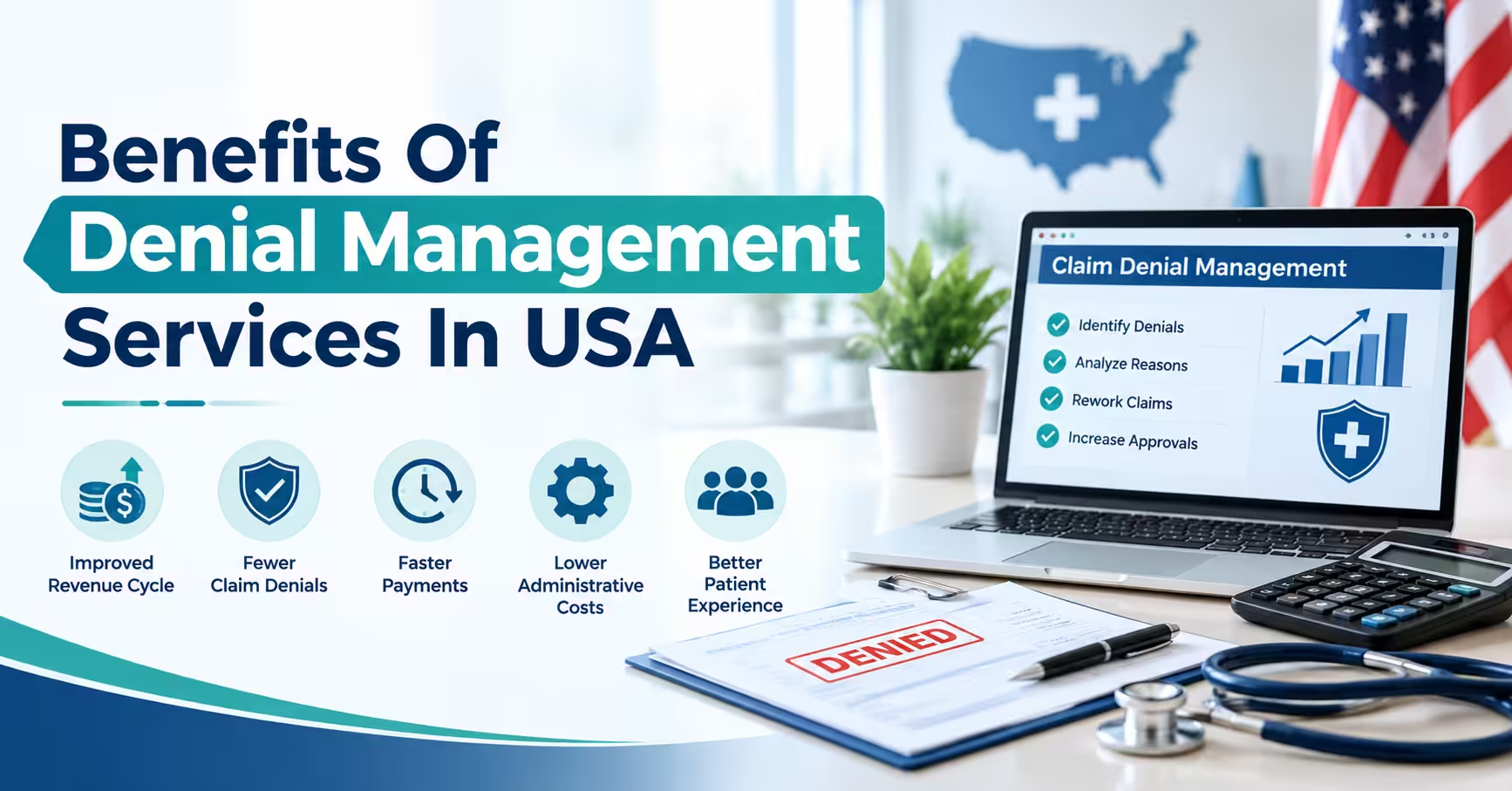








Each claim denial poses a risk to healthcare revenue, but not always these risks are recognized. Discover why medical practices need denial management to get their money, correct billing issues, and increase credibility.
Implementing Systematic Appeal Workflows To Recover Lost Revenue
In the complicated landscape of American healthcare administration, there is an unceasing struggle for medical facilities to get paid on time for the essential services they deliver.
Every day, many legitimate insurance claims are denied because of small errors in coding, incomplete data, or complicated policies.
These unpaid claims bring about serious financial problems, stress administrative employees, and waste precious time that could be used to take care of patients.
Working together with professionals in medical billing enables medical facilities to discover error patterns, correct denied claims promptly, and recoup lost revenue. Realizing the immense benefits of professional billing solutions allows medical facilities to secure their well-deserved income and establish a prosperous clinical practice.
What Are Denial Management Services?
Denial management services in USA are a systematic and strategic process employed by healthcare organizations to identify, address, and resolve insurance claim denials, as well as to prevent them.
These specific services will study billing information not only to determine whether a bill will be paid in full, but also to identify why a claim was denied by the commercial or governmental insurance provider.
Billing professionals with experience follow the complete claim process, discover the source of the billing errors, fix minor errors, and file timely appeals to ensure the claim is reimbursed in full.
The whole procedure changes the approach to handling claims from a reactive to a proactive one, improving health care cash flow, administration, and reimbursement of health care practitioners for services provided.
1. Recover Lost Revenue To Maximize Healthcare Cash Flow
One of the most short-term benefits of getting rejected claims resolved is to recover valid income that would otherwise be treated as uncollectible debt. Many insurance companies will be unwilling to accept a claim because there is a minor clerical issue that can be resolved in a matter of minutes.
In the USA, healthcare clinics, working with a professional denial management company, can ensure that all denied claims are re-examined, corrected, and resubmitted quickly. Bringing in unpaid money directly improves the profitability of the healthcare organization and gives it the financial resources they need to invest in updated medical equipment, grow clinical facilities, and recruit quality employees.
2. Accelerate Reimbursement Timelines For Faster Payment Collections
A lag between insurance claims and revenue slows down healthcare income, which can make it challenging for owners and leaders to control monthly costs or make long-term business investments. Reducing claim appeals reduces the wait times for payments and shortens overall claim turnaround.
Automated tracking systems are employed by dedicated billing teams to immediately track and follow up on pending appeals.
Claim mismatches are resolved promptly, and necessary medical documentation is provided promptly, avoiding the backup of claims in insurance queues and expediting the return of funds to the healthcare provider’s bank account.
3. Reduce Operational Costs By Automating Billing Workflows
Inside team members spend countless hours on hold with insurance representatives, through the complex process of appeals, and re-entering claim data manually.
This repetitive manual work contributes to additional payroll expenses, and it can divert workers from their other duties, such as patient care.
Delegating claim resolution duties improves internal administrative efficiency and also helps cut in on internal overhead costs. Comprehensive RCM services in USA can help healthcare leaders save on costly billing software subscriptions, cut staff overtime pay, and free internal resources to focus on enhancing patient experiences at the front desk.
4. Uncover Root Error Patterns To Prevent Future Denials
An effective way to solve denied claims is to focus on administrative patterns in the denied claims, rather than on specific denied bills.
To ensure that the same mistakes are not repeated, it is important to determine if denials are the result of eligibility issues, procedure codes, or missing authorization numbers.
Enhanced reporting features identify specific denial patterns among individual insurance plans and identify error sources at individual front-desk or clinical documentation points. This helps healthcare managers identify the root causes and take proactive measures to train staff, improve registration procedures, and avoid further billing mistakes.
5. Enhance Patient Satisfaction Through Clear, Transparent Billing
Patients face a lot of stress when their medical bills are unexpected, or they have disagreements with an insurance company, which can result in confusion and negative reviews, as well as delayed personal payments. Insurance denials frequently give the patient an unclear balance bill for services that should have been paid for by the insurance.
When insurance companies contest claims, patients can avoid the hassle of having to deal with unexpected financial issues.
By resolving coverage questions behind the scenes, patients are assured of accurate and transparent statements, which builds trust, boosts patient retention, and helps safeguard your clinic’s professional standing in the community.
6. Improve Coding Accuracy Across All Medical Specialties
Medical coding procedures are ever-changing, and it is difficult for in-house billing departments to be aware of changing coding rules and specialty-specific guidelines. Major commercial payers reject claims immediately if the codes or modifiers are incorrect or if they are out-of-date.
Specialty denial management experts have extensive knowledge of specialty-specific coding rules, medical necessity requirements, and modifier applications.
Collaborating with certified coders guarantees that each clinical service is coded correctly and adheres to coding standards, lowering newly submitted claim denial rates and maximizing legitimate reimbursements for complicated procedures.
7. Ensure Strict Compliance With Federal Healthcare Regulations
Constant monitoring is required to manage all the rules related to healthcare, privacy, and payment. If there is any mistake in the appeal process or if the deadline for appeals is missed, the consequences can be pretty serious, and money will be lost.
Professional denial resolution services have established workflows that are consistent for all appeals and are in compliance with the law.
Keeping up with changing federal regulations ensures your healthcare organization maintains a clear audit trail, follows tight HIPAA guidelines, and avoids expensive regulatory fines.
8. Free Up Internal Staff To Focus On Patient Care
Medical receptionists and clinical assistants can also find themselves in the midst of a plethora of billing documents, compromising patient care. Delegating the claims resolution work to third-party billing experts brings back the focus within healthcare.
Freeing up time from the task of dealing with insurance adjusters gives employees more time and energy to focus on patients, making appointments, and assisting doctors.
By maintaining a stress-free atmosphere in the office, employee morale is boosted, employee burnout is minimized, and the quality of care provided to patients each day is enhanced.
Frequently Asked Questions
What’s the distinction between claim rejection and claim denial?
Rejection means that there were problems with format or administration, such as a misspelled name or a missing policy number, and such claims are refused before the payer processes them. Denial refers to an already processed claim by the insurance company that is not paid due to coverage limitations or problems with medical necessity.
What are the most common reasons for medical claim denials?
The most common reasons for claim denial are expired patient insurance coverage, lack of authorization, wrongly coded diagnoses and treatments, resubmitted claims, and lack of important patient data when registering patients at the front desk.
How soon should claims be appealed after being denied?
Denied claims should be appealed as soon as possible, no later than 24 to 48 hours after getting your explanation of benefits. There are specific time limits on filing appeals with insurance companies of 30 to 180 days; thus, it’s crucial to act quickly.
How does professional denial management boost clinical profits?
Professional denial management boosts profits by ensuring revenue is recovered from denied claims, minimizing internal labor expenses, speeding cash flow, and recognizing error trends to make sure all subsequent claims will be accepted on the first attempt.
Do small clinics benefit from professional denial management services?
Yes, small clinics benefit greatly since they may not have the internal billing staff needed for dealing with complicated appeals. Outsourcing denial management allows small clinics to get help from certified coders and use analytics without hiring billing specialists.
Conclusion
Proper management of insurance claim denials is critical for keeping a financially, operationally, and stress-free healthcare practice running in the current complicated world of healthcare.
Finding out the source of errors and being sure that there is coding compliance will help prevent billing mistakes and turn an expensive process into a profitable one.
Eventually, by relying on professionals, you can have enough time to offer the highest quality of medical service while guaranteeing sufficient cash flow to expand your medical business.
With denial management, your money will be secure, protected from possible regulatory threats, and guaranteed to ensure long-term business profitability in the tough American medical market.