









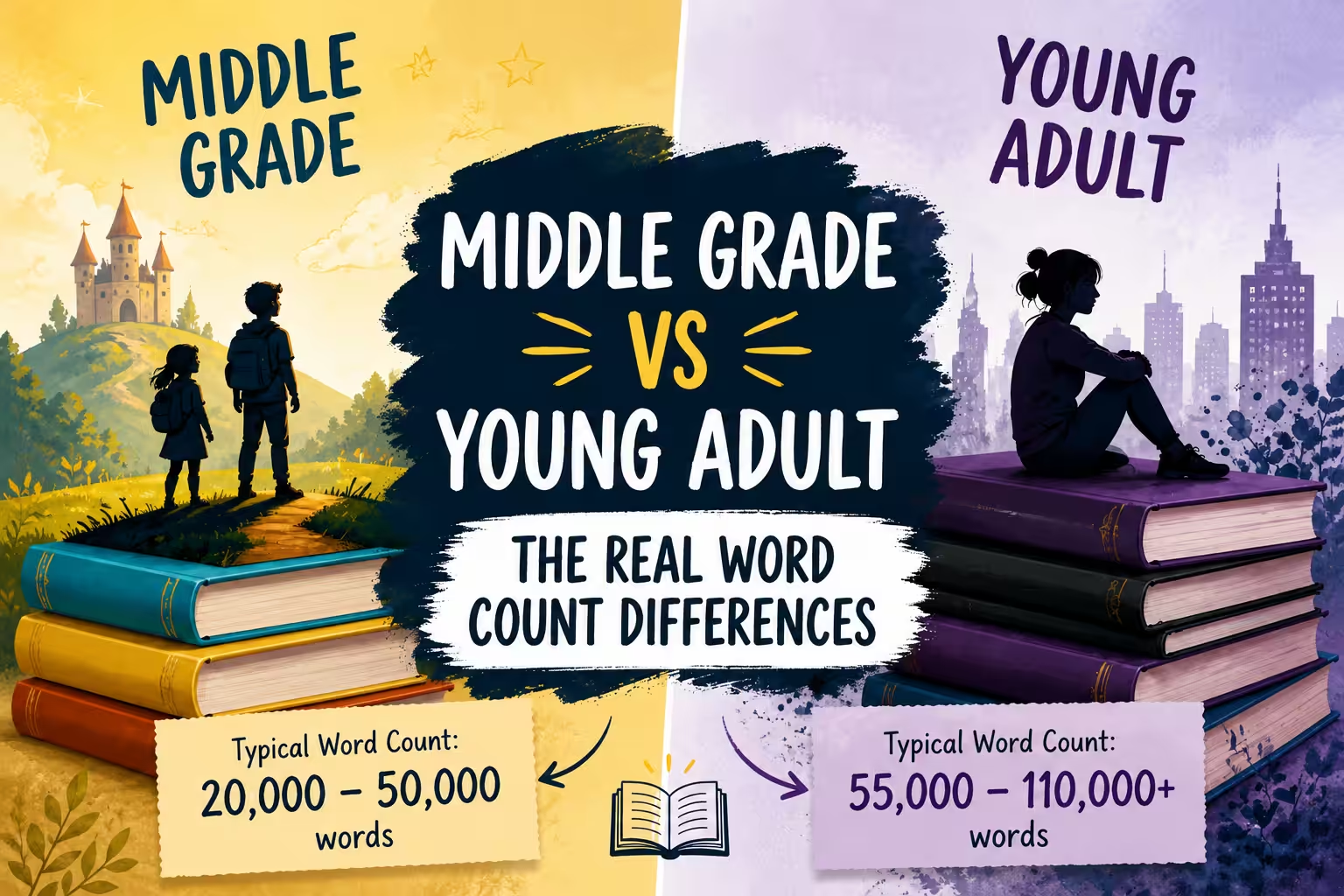
When a reader steps into a bookstore or browses an online library, a pile of books is neatly tucked into categories like “Middle Grade” (MG) or “Young Adult” (YA). Most of the time, the categorization is only considered on the basis of covers and themes. However, one of the biggest differences is something you can’t see just by looking at the shelf: the word count.
For writers, word count isn’t just a number. It is a roadmap that tells you how much space you have to develop a world, a character, and a plot. If a book is too short, the story feels thin. If it’s too long, the reader might lose interest. So if you are wondering why these word counts matter and how they differ between these two popular age groups, this is the moment when you will step into understanding the real difference. Keep reading to know more details regarding both types of novels!
What is Middle Grade?
Middle-grade books are written for children ages 8 to 12. At this stage, readers are moving away from short chapter books and starting to dive into a more realistic novel experience.
The Typical Word Counts for MG
A general overview of the length of these novels includes:
- Contemporary/ Humor: 20,000 to 50,000 words
- Fantasy/Sci-Fi: 40,000 to 70,000 words
Middle-grade stories usually focus on the world immediately around the child. These stories cover themes associated with friends, school, and family.
These stories avoid the need for a deep internal analysis, and this is the reason the word count stays lower. The pacing needs to be fast to keep a 10-year-old turning the pages with their full interest.
According to experienced publishers for childrens books, word count requirements are extremely precise and directly affect the chances of publication success.
What is The Young Adult Genre?
Young Adult books are for readers aged 12 to 18 (and often many adults too!). The focus of these stories is on all the first experiences of a child when they step out in the real world beyond their family and friends. YA tackles broader issues such as first loves, first big life decisions, and finding one’s identity in the wider world.
The Typical Word Counts for YA
An estimated word count for this genre is:
- Contemporary/Romance: 50,000 to 80,000 words
- Fantasy/Sci-Fi: 70,000 to 100,000+ words
In YA, the world expands. The characters are older, the emotions are heavier, and the plots often involve complex systems like governments or magic empires. This complexity demands more words to dive into a deeper internal reflection and explore the mature themes.
Why Does The Difference Exist Between Both Of The Categories?
Most of the people assume that the difference of a few thousand words shouldn’t matter. However, there are three main reasons why publishers stick to these ranges:
- Attention Span and Reading Level
A 9-year-old has different expectations than a 16-year-old. MG readers have shorter attention spans and will abandon a book that feels difficult to navigate. They enjoy action and dialogue that come with fast-paced and plot-driven stories.
YA readers, on the other hand, are often looking for complex narratives that allow them to process their feelings. This audience wants to spend a lot of time inside the character’s head, which naturally adds more words to the page.
- Plot Complexity
In Middle Grade, the plot is usually straightforward. These stories usually consist of one main mystery or one big goal.
For instance, a series of middle-grade children’s comic books will be light and easy to follow.
In Young Adult, you often see subplots. YA stories demand a good balance of action and description, which shifts the focus to multiple things going on at once. A YA protagonist will be trying to save the world while dealing with a complicated breakup and a falling out with a parent. More plot threads mean more pages!
- World-Building
If you are writing a story set in a middle school, you don’t need to spend 5,000 words describing the lockers and the cafeteria; every reader knows what those look like!
However, if you are writing a YA epic fantasy set on a floating island, you need space to describe the physics, the culture, and the history of that world.
A Quick Comparison Table for Both Categories
Take a look at the table below for a better understanding of both types.
| Feature | Middle Grade | Young Adult |
| Target age | 8 – 12 years old | 12 – 18 years old |
| Word Count Range | 20,000 – 70,000+ | 50,000 – 100,000+ |
| Protagonist Age | 10 – 12 years old | 14 – 18 years old |
| Primary Themes | Friends, family, “Who am I?” | Romance, society, “Where do I fit?” |
| Voice | Immediate and active | Reflective and emotional |
What Are Some Content Reminders for New Authors?
If you are writing your first book, hitting these numbers is very important. While famous authors like J.K. Rowling or Sarah J. Maas can write 200,000-word books, debut authors usually need to stay within the standard ranges.
But remember to capture the attention first with a professional children’s book cover.
For instance, if your Middle Grade book is hitting 90,000 words, analyze your story again. Details such as too many characters or a plot that is too grown-up are the barriers in most of the stories!
On the other hand, if your YA book is only 30,000 words, you need to dig deeper into your character’s emotions and descriptions to reach the word count range.
FAQs
- Are these word count rules different for self-publishing?
Self-publishing offers authors a more flexible approach. However, following these word count rules can help you meet the reader’s expectations, improve readability, and it helps you stay aligned with the genre norms.
- How does the writing style of both of these types differ?
The middle-grade books have a simple and clear language that follows a straightforward narrative. However, young adult books follow a more nuanced writing approach that prioritizes emotional depth and layered storytelling.
- How does language complexity differ in middle grade vs YA?
Middle grade makes use of an age-appropriate vocabulary and sentence structure. However, YA includes advanced language that surrounds abstract ideas and emotional nuance.
Final Thoughts
Word count is more than just a box to check. It is a tool that helps you respect your reader’s time and developmental stage. All you need to do is stick within the expected ranges to ensure that your story has the right rhythm for the people who will love it most! Whether you are writing a 30,000-word MG novel or a 90,000-word YA story, the goal is always the same: to tell a story that feels perfect for the intended reader holding the book!