








A great book is not just about the content present inside it. It is also about how it feels.
The first glance, the first touch, every small detail contributes to the reader’s experience.
Many people assume that all books are the same.
Until the time comes when they have to place books on their shelves, or they need to bend them and fit them in their bags.
This is the point where the physical structure of books comes into play.
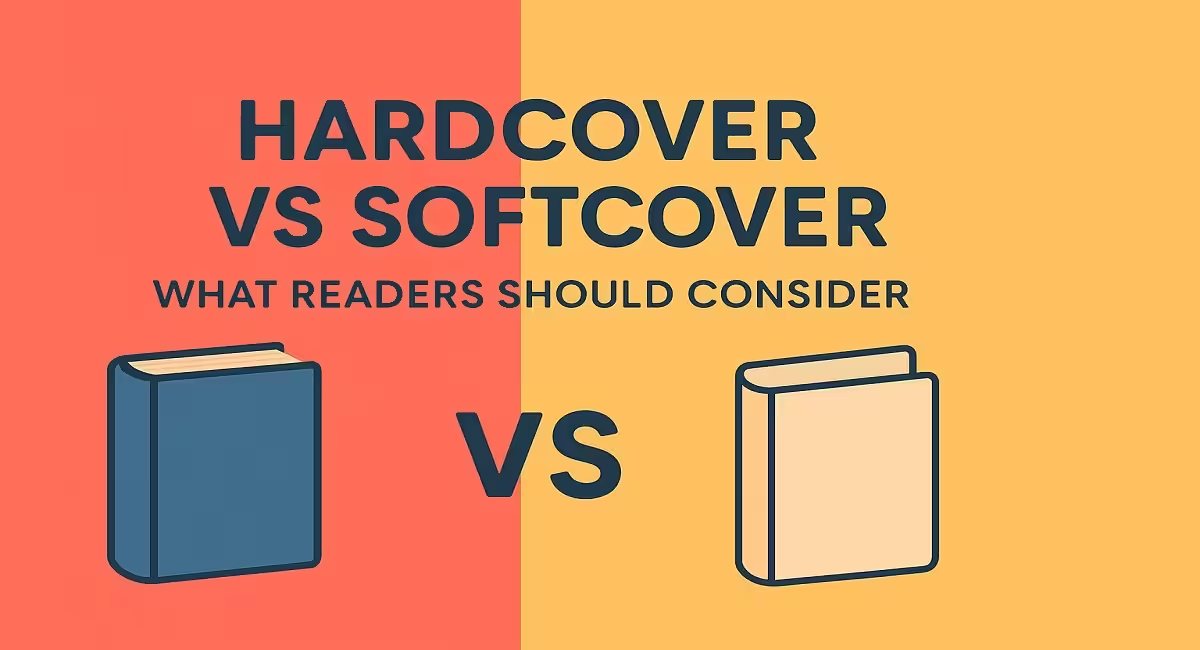
Hardcover and softcover are two of the most common formats, but they differ in purpose, design, and experience.
Understanding the key differences will help you make smarter buying and publishing decisions.
So keep reading to find out which one will perfectly fit all your needs.
What Is The Exact Definition Of Both Types?
Hardcovers and softcover books might look similar from a distance, but there are some distinct traits between them.
From authors, publishers, marketing professionals, to even readers, everyone should be aware of them to make informed decisions.
Let’s take a look at what exactly both of these are,
Hardcovers
A hardcover book has a rigid outer cover. These books are composed of paperboard or thick cardboard covers. The covers are often wrapped in paper, cloth, or leather.
Pages of these books usually give a high-quality feel and are usually bound with stitching.
The impressive and premium look on the shelves is also enhanced by a removable dust jacket that protects the cover.
The most common types of books from hardcover book printing are:
Softcovers
On the other hand, this category has a flexible cover made from thick paper or cardstock, which makes the book feel light. Instead of being sewn, the pages are mostly glued to the spine of the cover.
These characteristics make this type a more affordable and portable choice.
The most common genres in this category are:
Understanding The Differences Between The Two Types
Let’s take a look at the 8 major differences to help you choose the best option for your book.
Durability
Hard covers are a durable choice. The sturdy binding prevents the bending or tearing of pages.
However, softcovers have spines and covers that can bend or wear down faster.
Here is what you need to remember from both perspectives, an author and a reader,
| Hard cover | Soft cover |
| It can easily survive repeated uses. | Good for casual reading, won’t last long. |
| Communicate the authors’ value and prestige. | Cheaper to print and easier to distribute. |
Cost Of The Book
There is a major price difference between the types when you are considering a professional company for book printing Canada. The materials and labour involved are the most significant contributors to these.
Hardcover editions usually cost more as compared to softcover books. The use of thick materials and top-quality binding justifies the high prices of this type.
However, a softcover is usually inexpensive. They are picked by students or reading lovers who just want a good story, not a valuable piece of collection.
For authors,
- Hardcovers can be sold at premium prices; they can release a few copies only.
- Soft covers come with lower production costs and wider distribution.
Weight And Portability
Here is what you need to know about this factor in both types,
| Hard cover | Soft cover |
| This type is heavier and bulkier | It is a flexible and light option |
| Works great for desks and shelves | Can be easily carried around |
| Increase the shipping costs due to their weight | Have no major logistics costs |
Aesthetics
The design and feel of your book will play a key role in attracting the target readers. Hardcover books are known for their sophisticated and luxurious looks.
Their cover consists of elements such as
- Foil lettering
- Raised titles
- Matte finishes
- Premium quality paper
The presence of these eye-catching details makes these books visually appealing from a distance.
Moreover, authors can make use of these covers to convey their seriousness and professionalism around the book.
However, the case is different with softcover books. They offer minimal and less tactical finishes compared to hard covers.
Publishing Strategy
Hard covers are usually considered for the first release. Literary awards and book enthusiasts often prefer hard covers as an ideal choice.
However, there is a fix strategy behind this.
Authors usually choose to go for softcover launches once they witness a surge in sales and an expanded market.
In this way, they get to boost and maintain the book’s lifespan, making it available for the market while saving costs.
The Value Of Books
Considering the authors’ and the readers’ perspectives, here is how both types are valued
| Hard cover | Soft cover |
| The signed versions serve as collectables. | These are read, distributed, and replaced easily. |
| Percieved as a sign of credibility. | Suitable for one-time attention. |
Experience
A soft cover may look appealing to readers who are on a budget. Moreover, they offer a casual feel, as readers can read and carry them anywhere.
On the other hand, hardcovers are an ideal choice for someone who prefers aesthetics and long reading sessions.
Distribution Channels
Both types dominate different spaces.
| Hard cover | Soft cover |
| Available at libraries, premium book stores | Found in supermarkets, online stores |
| Target a few sales for high-end prices | Mass distribution and bulk purchases |
FAQS
- Why do some authors launch hardcovers first?
Hardcovers are launched first because readers are willing to pay more at first. This assists publishers and authors in generating profitable outcomes before introducing a cheap paperback version.
- What is a better option for gifting?
Hardcovers are considered a more special option due to their dust jackets. People prefer them for holiday and birthday gifts as a memorable keepsake.
- Which format is better for travel?
Softcovers are the top choice for travelling. They are light, easy to bend, and only occupy a little space in backpacks.
Wrapping Up
Ultimately, the final choice depends on the factors that align with your preferences. If you want something light, budget-friendly, and with easier distribution channels, a softcover is your ideal choice. However, if you want to focus on branding and creating long-term value, there is nothing better than a hardcover. Remember, the most effective approach is to capture a premium audience at first and then expand with paperbacks!