






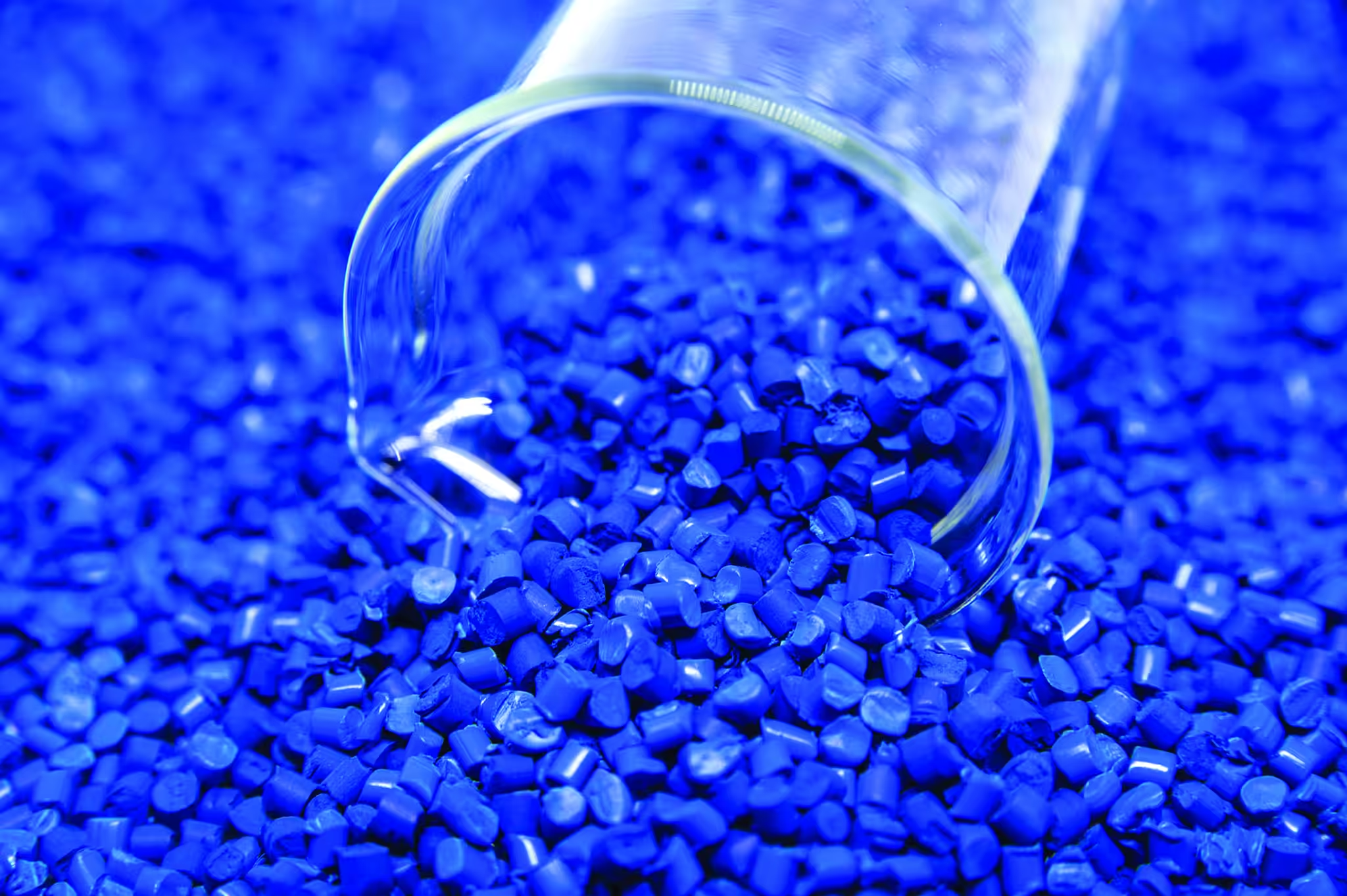
PET — polyethylene terephthalate — is one of the most widely processed polymers in the world. Bottles, packaging films, fibre, and technical textiles. The volumes are enormous, and so are the quality expectations. When processing PET, the masterbatch you choose shapes everything from clarity and colour to melt viscosity and product shelf life. Getting the wrong masterbatch supplier is not just a quality problem — it can shut down a production line.
This guide explains what makes PET Masterbatch different, how to evaluate masterbatch suppliers, and what questions you should be asking before you place an order.
Why PET Masterbatch Is More Demanding Than Standard Masterbatches
PET processing temperatures typically range between 270–290°C. That is significantly higher than commodity polymers like PP or LDPE. And PET is hygroscopic — it absorbs moisture from the air, and any moisture during processing causes hydrolytic degradation, reducing intrinsic viscosity (IV) and compromising mechanical properties.
A PET Masterbatch must therefore be formulated with a PET-compatible carrier resin, thermally stable at 280°C+ without discolouration or gas generation, dried before use at 140–160°C for 4–6 hours, and free from moisture-sensitive additives that could cause IV drop. Masterbatch suppliers who do not understand these requirements will give you product that looks fine in the bag and causes havoc in the machine.
Types of PET Masterbatch and Their Applications
Colour Masterbatch for PET
Used in bottles, fibres, and packaging films. Requires pigments that are thermally stable at PET processing temperatures and free from heavy metals for food-contact applications.
Reheat Masterbatch for PET Bottles
A critical additive for stretch blow moulding. Reheat masterbatch absorbs infrared radiation and speeds up the preform reheating step, improving production efficiency and reducing energy consumption by up to 15–20%.
UV Barrier Masterbatch for PET
Protects UV-sensitive contents (edible oils, juices, cosmetics) from light-induced degradation while achieving high UV blocking without significantly reducing visible light transmission.
Acetaldehyde (AA) Scavenger Masterbatch
Acetaldehyde is a by-product of PET degradation during processing. For food and beverage packaging, AA levels must be kept below 5–10 ppb. AA scavenger masterbatch absorbs this compound and keeps the packaged product’s taste unaffected.
PET Masterbatch Types — Quick Reference
| Masterbatch Type | Primary Function | Typical Application |
| Colour Masterbatch | Pigmentation | PET bottles, fibres, films |
| Reheat Masterbatch | IR absorption for blow moulding efficiency | PET bottle preforms |
| UV Barrier Masterbatch | Block UV light transmission | Juice, edible oil bottles |
| AA Scavenger Masterbatch | Reduce acetaldehyde levels | Water and beverage bottles |
| Nucleating Masterbatch | Control crystallisation rate | Thermoformed PET trays |
| Slip Masterbatch | Reduce surface friction | BOPET films, packaging |
How to Evaluate Masterbatch Suppliers for PET Applications
Carrier Resin — Non-Negotiable
The masterbatch carrier must be PET-based. Using PP or PE carrier-based masterbatch in PET introduces an incompatible polymer that causes haze, delamination, and IV drop. Ask this question first.
Intrinsic Viscosity Impact
Ask for IV data. The masterbatch should have minimal impact on the melt IV of your PET resin. Some suppliers publish “IV neutral” formulations specifically designed for this.
Food Safety Compliance
For packaging applications, the masterbatch must comply with FDA 21 CFR or EU 10/2011 regulations for food-contact materials. Reliable masterbatch suppliers will provide a declaration of compliance.
Common Mistakes When Working with PET Masterbatch
- Using an undried masterbatch—even a few hours of ambient exposure can introduce enough moisture to cause processing defects
- Mixing PET masterbatch with regrind that has been exposed without moisture management
- Choosing masterbatch suppliers based on colour appearance alone without checking IV impact
- Exceeding recommended let-down ratios, which can affect bottle clarity and mechanical properties
- Not checking food-contact compliance for packaging applications
Conclusion
PET Masterbatch is a high-stakes product. The technical demands of PET processing — high temperatures, strict IV management, food safety requirements — mean that the masterbatch suppliers you work with must genuinely understand the material. Do your due diligence, ask the right questions, and run trials before scaling up.
Ready to find masterbatch suppliers who specialise in PET applications? Request a technical data package and product trial today — and see the difference expertise makes.
FAQs
Q1. Why must PET Masterbatch be dried before processing?
PET and PET-carrier masterbatch absorb atmospheric moisture. Undried material undergoes hydrolytic degradation during melt processing, causing IV drop, splay defects, and mechanical property loss.
Q2. What is reheat masterbatch and why is it used in PET bottles?
Reheat masterbatch contains IR-absorbing particles that help preforms absorb heat faster during the blow moulding reheat step, improving line speeds and reducing energy consumption.
Q3. Can masterbatch suppliers provide food-safe PET colour masterbatches?
Yes. Reputable suppliers formulate food-contact PET masterbatches compliant with FDA 21 CFR and EU 10/2011. Always request the relevant declaration of compliance.
Q4. What let-down ratio is recommended for PET colour masterbatch?
Typically 1–3% for colour masterbatch in PET. Higher loadings risk mechanical property compromise and IV impact. Your supplier should provide specific guidance.
Q5. How does UV barrier masterbatch in PET bottles work?
It contains UV-blocking additives that absorb or reflect UV radiation, protecting the packaged product from light-induced degradation — important for oils, juices, and beverages.
Q6. How do I compare masterbatch suppliers for PET applications?
Ask for IV impact data, food-contact compliance documentation, thermal stability test results, and carrier resin type. Request a trial batch before committing to volume orders.